Leather Menu Covers for Gastropubs: A Practical Buyer’s Guide
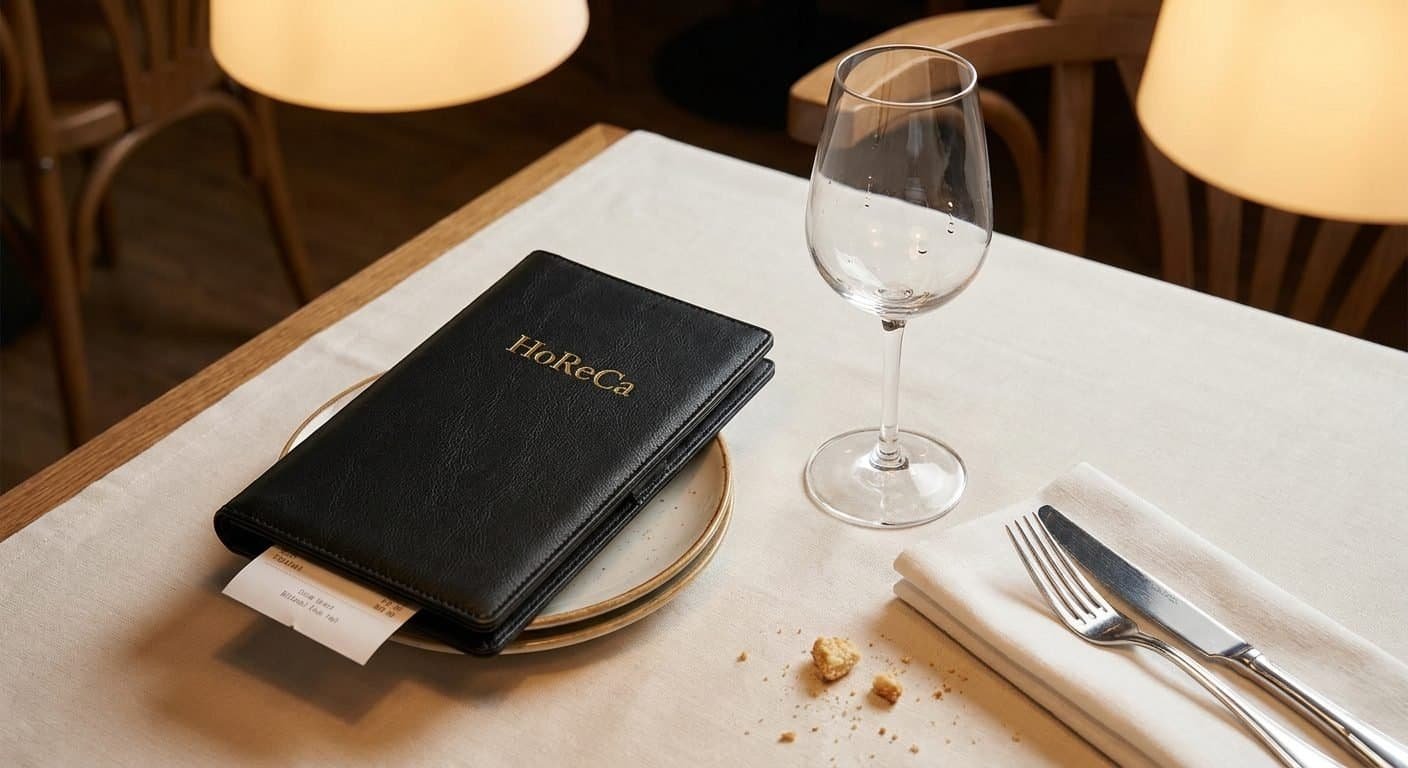
Gastropubs occupy an awkward middle ground for menu cover specification. The food is serious — often better than many restaurants that would not hesitate to spend on premium tableware. But the environment is a pub: loud, busy, tables turning quickly, menus handled by guests who have been drinking since the afternoon.
The result is that gastropub menu covers need to work harder than fine dining covers and look better than casual dining covers. Getting the specification right means choosing materials and formats that survive the environment without looking like they were chosen for survival.
The Gastropub Menu Challenge
A gastropub menu typically covers more ground than a restaurant menu: a full food menu, a drinks list (beer, wine, spirits, cocktails), a specials board updated daily or weekly, and possibly a Sunday roast menu as a separate document.
That is a lot of documents for a table that also has condiments, cutlery and a pint glass on it. The cover specification needs to account for this:
Format efficiency matters. A large A3 food menu that covers half the table is impractical in a busy pub environment. Many gastropubs use A4 as the maximum format, sometimes with a bi-fold that opens to A3 — giving the full menu surface when needed but folding to a manageable footprint when the guest sets it down.
Durability is non-negotiable. Gastropub covers are handled dozens of times per night by guests who are less careful than fine dining guests. Beer, ketchup and gravy are more likely hazards than wine and consommé. The cover specification needs to reflect this.
The aesthetic still matters. A gastropub that has invested in reclaimed timber tables, exposed brick and a serious kitchen does not want laminated paper menus held together with a bulldog clip. The menu cover communicates that the food is taken seriously, even if the environment is relaxed.
Material Recommendation
High-grade PU leather is the practical choice for most gastropubs. The reasons are straightforward:
- Wipe-clean surface handles beer, sauce and grease better than genuine leather
- Lower unit cost allows replacement when covers wear without significant budget impact
- Consistent appearance across a large cover set — important when 40 covers are on the floor simultaneously
Genuine leather is appropriate for gastropubs that are closer to the restaurant end of the spectrum — venues with table service throughout, a serious wine programme and a kitchen that produces dishes priced above £20. In these environments, the investment in genuine leather is justified by the overall positioning.
For most gastropubs, specify high-grade PU in a dark colour — black, dark brown or slate — that does not show fingerprints or minor staining. Avoid tan and camel at this volume of use.
For a full material comparison with cost and lifespan analysis, see our leather vs PU guide.
Format Recommendations by Document Type
Food menu: A4 bi-fold The most practical format for a gastropub food menu. Closed it is compact; open it gives a full A3 surface for a menu with multiple sections. Specify a cover with internal pockets on both panels so the menu insert can be changed without replacing the cover — essential if the menu changes seasonally or the specials are printed separately.
Drinks list: A5 single fold A drinks list that runs to two or three pages fits comfortably in an A5 cover. Smaller than the food menu, which makes it easy to handle alongside a pint glass. Some gastropubs clip the drinks list inside the food menu cover rather than using a separate cover — a practical approach that reduces the number of items on the table.
Specials card: single panel or clipboard A daily specials card is typically a single printed sheet rather than a multi-page document. A rigid single-panel leather cover — or a leather-wrapped clipboard — presents the specials cleanly without requiring a full cover format. Logo embossed on the front, the insert slid behind a leather strap or into a slot at the top.
Check presenter: single fold with card slot Gastropubs increasingly take card payment at the table. A single-fold check presenter with a card slot on the inside left panel — the card visible and accessible — is the standard format. Specify in the same leather and colour as the food menu cover.
Colour and Logo Treatment
Colour: dark brown, black or slate. All three read as considered in a gastropub environment without crossing into fine dining formality. Dark brown works particularly well with reclaimed wood and industrial interior aesthetics. Black suits contemporary pub refits with a minimalist identity.
Logo treatment: blind embossing is the most appropriate for a gastropub — present but not aggressive. Gold foil suits pubs with a heritage identity; silver foil suits more contemporary refits. Avoid large logo placements that make the cover look like branded merchandise rather than tableware.
Logo position: front cover, bottom right or bottom centre. Visible when the cover is on the table, not dominating the surface.
For logo file requirements, see our logo embossing guide.
Quantity Planning
Gastropubs typically have higher table counts than restaurants of equivalent kitchen size, and higher turnover. Apply the standard formula — table count × 1.2 — and add a larger buffer for the drinks list, which is handled more frequently and returned to the bar at unpredictable intervals.
A 40-table gastropub needs approximately: – 48 food menu covers (40 × 1.2) – 48 drinks list covers (40 × 1.2) – 20 check presenters (40 ÷ 2 + 20% buffer)
At this quantity, all three products meet our 50-piece MOQ and can be ordered together in a single matched production run.
For the full quantity calculation logic including annual loss rates by venue type, see our menu cover quantity guide.
Replacement Planning
In a high-volume gastropub, plan for annual replacement of 15–20% of your cover stock. At 48 food menu covers, that is seven to ten covers per year. Budget for a reorder every twelve to eighteen months rather than waiting until covers are visibly deteriorated.
The most practical approach is to maintain a buffer of ten covers in storage and reorder when the buffer drops to five. At our production and delivery timelines — approximately four to five weeks for a repeat order — this gives sufficient lead time without carrying excessive stock.
Ready to Order?
Browse our leather menu covers and check presenters for format and colour options. Use the quote form to send us your table count, document list, material preference and logo — we will provide pricing and a digital proof within 24 hours.
HoReCa Leather supplies custom leather menu covers from Shiling, Guangzhou. MOQ from 50 pieces, 7-day sampling, DHL delivery to Europe and the Middle East.
Ready to source custom menu covers for your restaurant?
MOQ 50 pieces. Sample in 7–10 days. Quote within 24 hours. Factory-direct from Shiling, Guangzhou.